Exploring Gothic Architecture in Barcelona: A Student’s Guide
Why Study Gothic Architecture in Barcelona?
There are so many beautiful styles of architecture in the world, but few pack the same weight of symbolism as the Gothic style that can be found in Barcelona, Spain. From its dramatic vaults to its roots in medieval culture, Gothic architecture represents the Christian heritage that has been such an important part of Barcelona’s history. Studying these relics of time not only deepens one’s understanding of the history in Spain, but also the importance of religion in society.
In Barcelona, Gothic architecture mirrors the city’s trajectory across centuries. On the historical level, the great stone edifices of the 13th and 14th centuries demonstrate Catalonia’s wealth and growing influence as a Mediterranean mercantile hub. Religiously, Gothic cathedrals and basilicas embodied devotion through scale, symbolism, and space.
Society, too, left its imprint on Gothic architecture. These structures often functioned as community centers and civic monuments, showcasing the aspirations and values of their builders. This can be seen in Barcelona’s Gothic quarter through its medieval guild halls, noble palaces, and religious institutions sat side by side, creating a built environment where political, religious, and social life intersected. Gothic architecture, in short, became the stone record of a society’s faith, resilience, and creativity.
Key Examples of Barcelona Gothic Architecture
The Gothic Quarter (Barri Gotic)
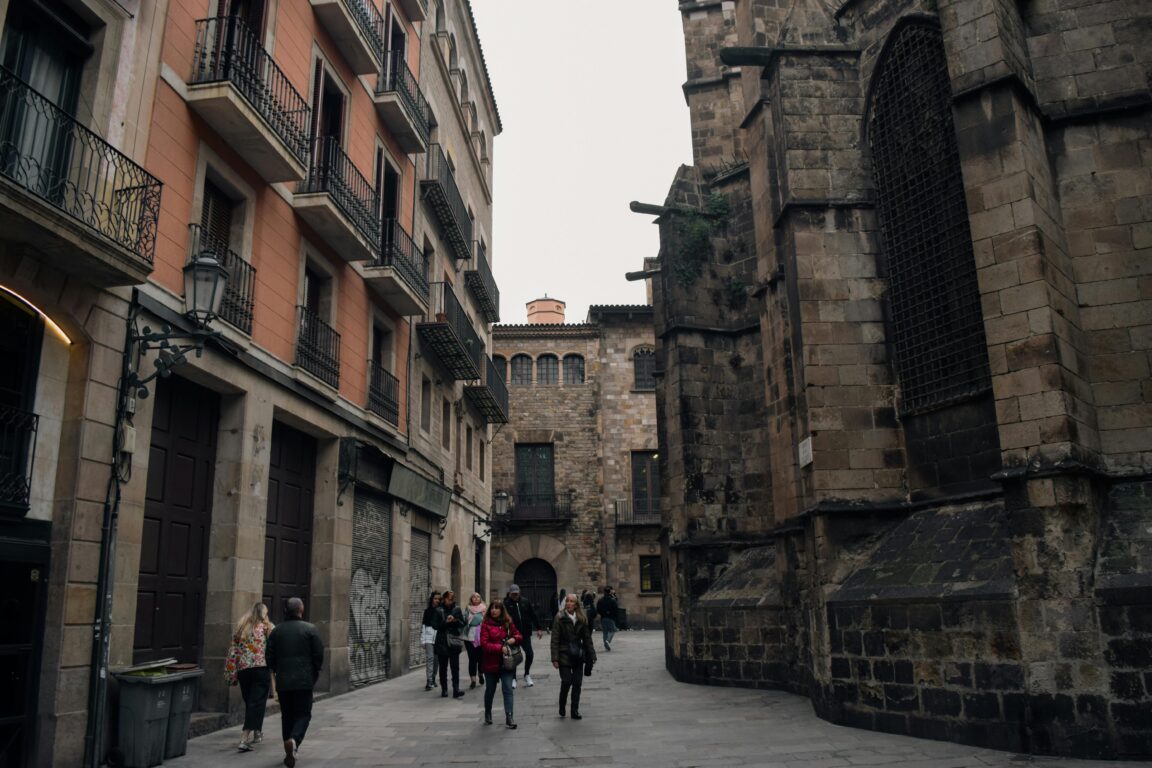
Walking through the Gothic Quarter (Barri Gòtic) feels like stepping back into the Middle Ages. Narrow, labyrinthine streets open into atmospheric squares such as the Plaça del Rei, once the center of noble life. The square houses the Royal Palace and the Royal Chapel of Saint Agatha, where Christopher Columbus was received by Ferdinand and Isabella after returning from the New World. Around the quarter, fragments of Roman walls and temples still stand, reminders of the city’s ancient origins woven into the medieval fabric. The density and quality of preservation in the Gothic Quarter make it a prime setting for students to grasp layers of history. Unlike many European cities where modern development has erased medieval patterns, Barcelona maintains a tangible medieval core.
Barcelona Cathedral (Catedral de la Santa Creu i Santa Eulalia)
Barcelona Cathedral is the crown jewel of Catalan Gothic style. Construction began in 1298 and continued for centuries, though its iconic neo-Gothic version was only completed in the late 19th century. Its interior features slender columns, ribbed vaults, and elaborate choir stalls bearing the crest of the Order of the Golden Fleece. It is also decorated with gargoyles guarding the entrance. The Cathedral is dedicated to the young martyr Eulalia, who was tortured at age thirteen for her Christian faith. The cloister’s tradition of keeping thirteen white geese keeps her story alive within the architecture itself. Inside the crypt of the cathedral holds Eulalia’s alabaster tomb sculptured with images of the saint’s martyrdom.
For students, this cathedral offers a rich comparative study. One example of an exercise that can be done can include comparing Barcelona Cathedral with Notre Dame in Paris or another major Gothic cathedral. Such an exercise highlights variations in architecture around different regions. While French Gothic emphasizes verticality and ornate façades, Catalan Gothic is more restrained, with an emphasis on wide naves and harmonious space.

Santa Maria del Mar
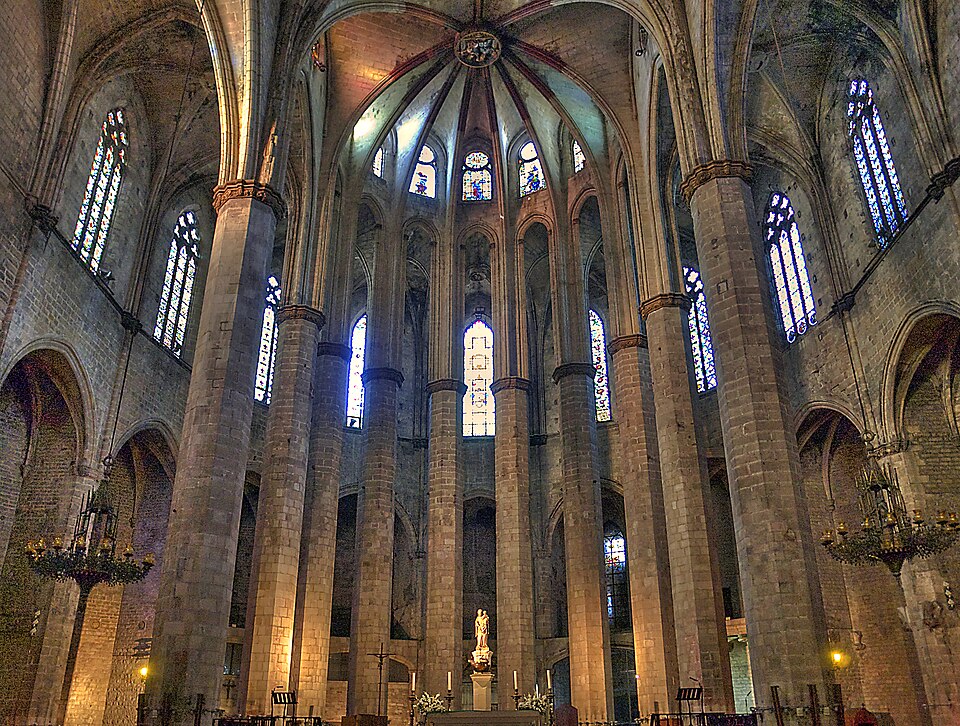
Known as the “People’s Cathedral,” Santa Maria del Mar exemplifies the medieval prosperity of the capital of the Principality of Catalonia. The Basilica of Santa Maria del Mar, built between 1329 and 1383, showcases this prosperity. In order to be built merchants and dockworkers personally hauled stone from Montjuïc hill to construct the church in just 54 years! For reference, the construction of a typical cathedral in this time often took centuries! This civic effort reflects how deeply Gothic buildings were tied to the people’s pride for their city.
This basilica also ties Gothic architecture to Barcelona’s maritime history. Located in the Ribera district, it rose alongside the city’s economic and naval prominence. Inside, the equal height of its three naves and the slender pillars create an elegant, airy sense of space. Its story demonstrates how Gothic architecture was not only a tool of the Church but also a reflection of civic strength.
Teaching Gothic Architecture On-Site
Barcelona provides an extraordinary opportunity for teaching Gothic architecture through direct engagement. Students can carry out observation activities by identifying key Gothic elements such as arches, stained glass, ribbed vaults, and gargoyles. They might compare how light filters through different glass-stained windows or sketch façades and vaulted ceilings to reinforce lessons on proportion and structure.
Sketching exercises, such as drawing the rose window of Santa Maria del Pi or the columns of Santa Maria del Mar, encourage students to look more closely at form and detail. Assignments could also include mapping the Gothic Quarter’s narrow streets to understand medieval urban planning. These activities ground abstract architectural concepts in real, lived experience.
Studying Gothic architecture in Barcelona opens a window into the city’s layered past and its enduring cultural identity. From the civic pride embodied in Santa Maria del Mar to the martyrdom remembered in Barcelona Cathedral, Gothic structures reflect the interplay of history, religion, and society. As one of Europe’s best-preserved Gothic hubs, Barcelona provides both scholars and students with an unparalleled environment to explore how architecture can serve as the stone memory of a people
As a leader in educational travel, ACIS distinguishes itself through meticulous planning by dedicated program consultants, centrally located hotels for optimized exploration, and uniquely tailored experiences to help teachers meet their classroom goals. Find your perfect trip to Barcelona and explore the gothic masterpieces with your students!


Eric Kim