Summer Travel Kicks Off
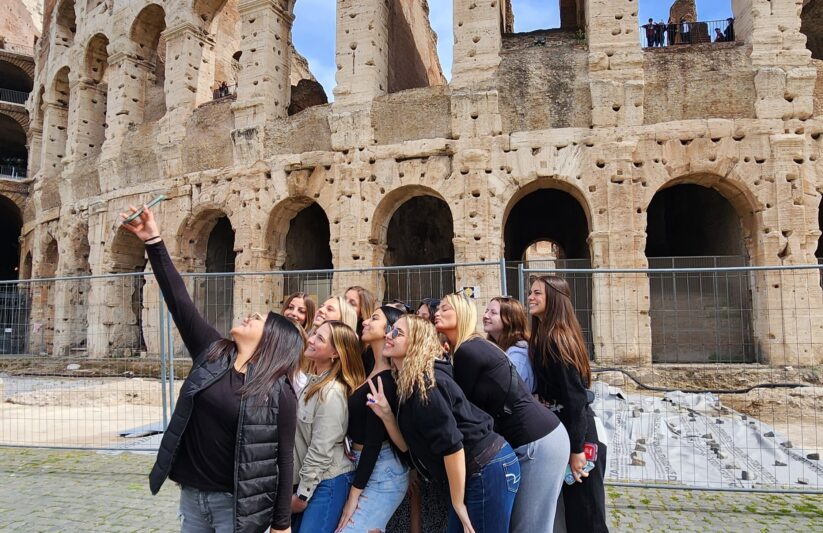
Just traveling sometimes seems to have unexpected consequences. So what are the barriers for getting into Europe? How are the queues around the Louvre and the Vatican? How do we assess the implications of the Iran war against the daily rhythm of a tour? What should I be thinking about if I’m taking a group of students to Europe at the moment? First and foremost, Europe is safe. It’s busy. Lots of people are traveling. Enjoy the long days: In Paris the sun sets around 10 pm in June! So, lots of daylight time to plan fabulous walks around the city.
How is customs? Lets start with the UK. Getting into the UK is very simple. You just need to download the ETA app, scan your passport, pay 20 pounds (around 25 dollars) and it’s essentially a two year visa. Everything is biometric. You enter along British citizens. Your data has been biometrically stored. Easy. It takes about 5 minutes to complete the ETA exercise. .
As for Europe, it’s a different scene. You have to register on arrival if you’ve never been to Europe before. Europe being the 29 member states of Schengen. All of the EU plus Iceland, Norway, Liechtenstein and Switzerland. They are not charging at the moment, but are planning to by the end of 2026. Right now you just have to go through a biometric registration. Once you’ve done that you have registered and essentially you’re on a 90 day countdown. You’re only allowed to stay for three months. So if you’re planning to relocate to Europe, with an American passport, you are legally allowed to stay for 3 months for every 6 months. Unless our students intend to stay longer – Maybe tell your parents and your teacher! It doesn’t affect our groups who are usually there for 10 days.
There’s a chance for lines. Give time for connections and have something on your mobile device you can listen to. The rest of your journey will be easy and hassle free as Europe is in the Schengen Zone so no passport controls beyond the first check. The biometric scan process is relatively easy. First passport, then face recognition, with 4 fingerprints. Then you go to a second scan which scans just your face while you insert the passport and then you’re practically done. Some places still allow for a human to check and stamp your passport, but that will fade away over the next few months. Once you’ve done the biometric test you are essentially through the EES system. if you’re in transit in an airport that is in the 29 country zone of Schengen, you will not need to show your passport again. Lets say you fly USA to Munich. And then connect to Rome. Once you have cleared Munich, you will be in the 29 Schengen zone, so when you arrive in Rome, there is no passport check.
Imagine what people coming to the USA have to go through. This is much easier. Ultimately, the goal will be to speed you through much faster. We are still in the infancy stages. Once it gets close to perfect, the Europeans will charge for the pleasure of your company! Just for everyone’s info an ESTA to get into the USA costs a European 40 dollars and there’s a whole lot of paperwork involved. Lots of rejections and denials. The EES is currently free entering Europe and is all on biometric technology.
Bon Voyage!



Peter Jones In 1978, Peter Jones founded ACIS with a few colleagues, who all believed that travel changes lives. Knowing the important difference between a trip that’s mediocre and one that’s extraordinary, he built ACIS from a deep belief and understanding that ACIS group leaders and participants deserve the best—from itinerary development to hotels to perhaps most importantly, the people hired to guide teachers and students throughout the journey.