5 Hidden Architectural Gems in the World
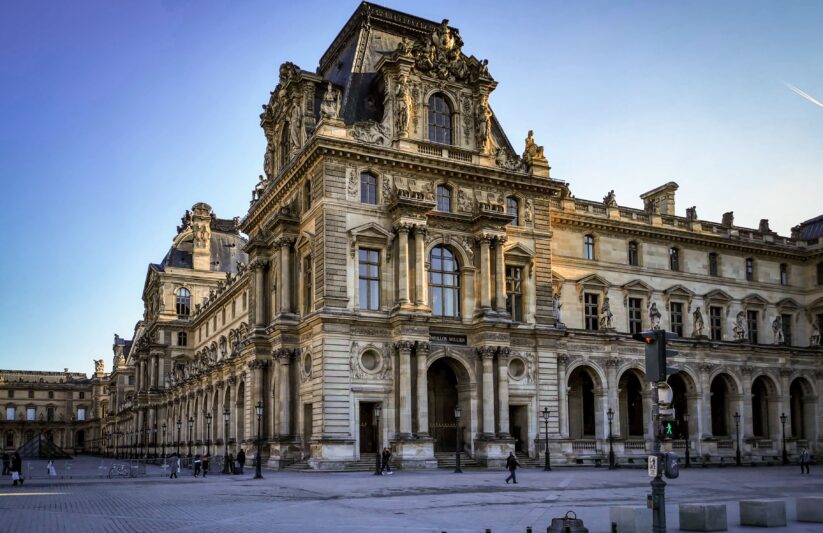
One of the biggest reasons people – especially students – travel around the world is to see the incredible architecture it has to offer. Through architecture, we can learn more deeply about the history and culture about a location and how the past shaped the present community. Architecture speaks to the people who built it and showcases their beliefs, ingenuity, fears, and ambitions; But sometimes, those stories only come to life when you look past the big Bucket List monuments.
At ACIS, we believe that the most powerful learning happens outside of the classroom, and that’s why we’ve built various educational travel programs to the world’s most visited destinations, showcasing remarkable hidden architectural gems, where history isn’t just behind a glass but rather all around you.
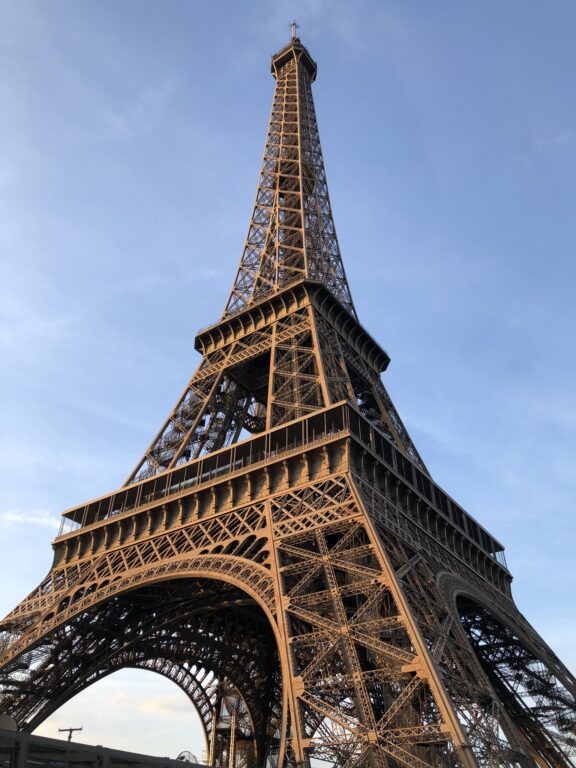
Gustave Eiffel’s Secret Apartment – Paris, France
When Gustave Eiffel unveiled the Eiffel Tower in 1889, it was later revealed that he had built a private apartment for himself on the upper platform of the tower. The space hosted some of Paris’ greatest scientific minds and prestigious visitors such as Thomas Edison. Now the apartment serves as an exhibition furnished in its 19th-century look, along with lifelike statues of Eiffel, his daughter, and Edison.
The Eiffel Tower is one of the most popular architectural pieces in the world, and along with Paris being a really popular destination, it’s hard to miss this location; however, not many people know about the secret apartment. Visiting transforms the landmark from just being an iconic location to a story of the real people and ideas that went into the Eiffel Tower’s creation.
ACIS Trip Spotlight: Insider’s France
The Whispering Gallery at St. Paul’s Cathedral – London, England
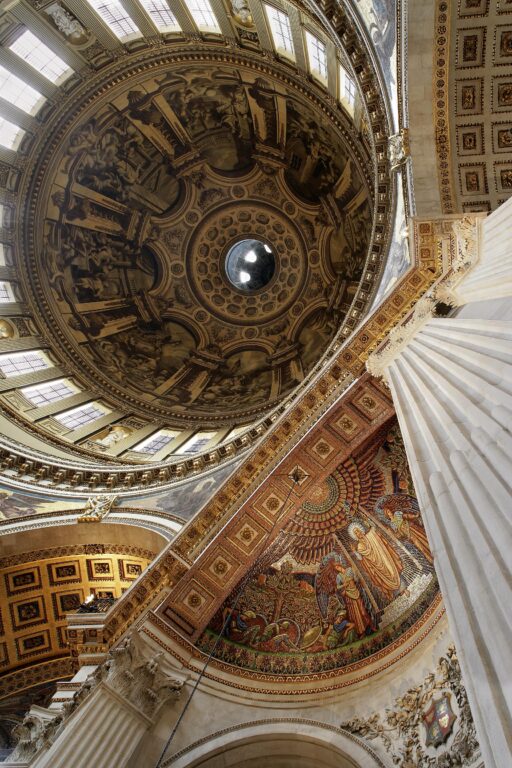
The Whispering Gallery encircles the base of the great dome of St. Paul’s Cathedral, about 30 meters above the cathedral floor Accessed via 259 steps, the gallery uses the curvature of the stone walls to carry whispers spoken on one side of the wall to the opposite side, nearly 34 meters away.
When it comes to experiences made for students to get the most out of their educational travels, whispering into walls and hearing a reply from across the room certainly adds to the thrill. The Whispering Gallery is a remarkable gateway into the physics of sound and how mathematics plays into Baroque architecture. Students can explore how the dome’s circular form creates a “whispering gallery wave,” making this beautiful dome a learning experience, as this is a concept that still applies in modern engineering. Visiting this cathedral gives students the opportunity to have a glimpse into the history of the destination and broaden their understanding of classroom learning objectives visualized in real-life.
ACIS Trip Spotlight: Insider’s London
Özkonak Underground City – Cappadocia, Türkiye
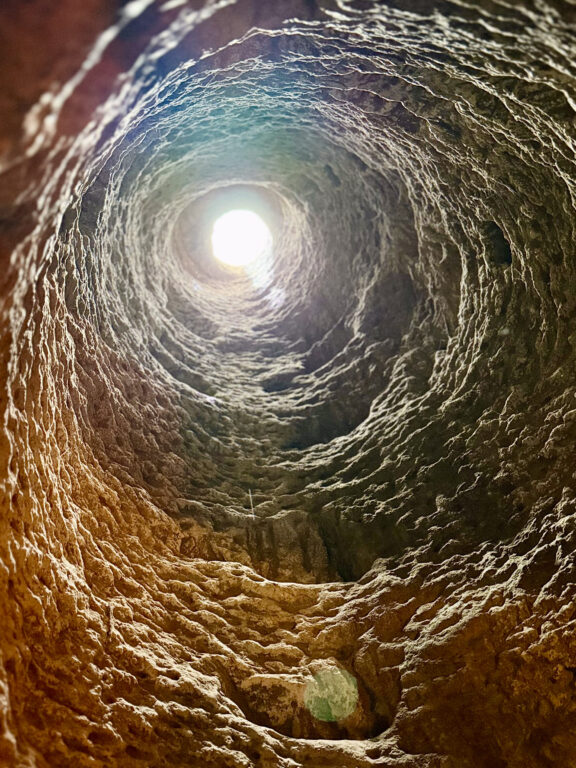
The Özkonak underground city was discovered in 1972 by a local farmer named Latif Acar after he had noticed that the water he used to irrigate his crops kept mysteriously draining into the ground. Latif then discovered an entire ancient city carved into the northern slopes of Mt. Idis, which is believed to date back to around 400 BCE. It is also known for its unique features like a pipe communication system connecting every city level and a network of holes above its gateways through which defenders could pour hot oils to fend off invaders.
Özkonak underground city offers students the opportunity to explore a city from antiquity and discuss subjects like the ingenuity of pre-modern engineering and the daily life of ancient communities. Students can grow their understanding of ancient Turkey and learn about the unique systems that allowed such a curious and amazing city to be built underground.
ACIS Trip Spotlight: Empires of Türkiye
Las Lajas Sanctuary – Ipiales, Colombia
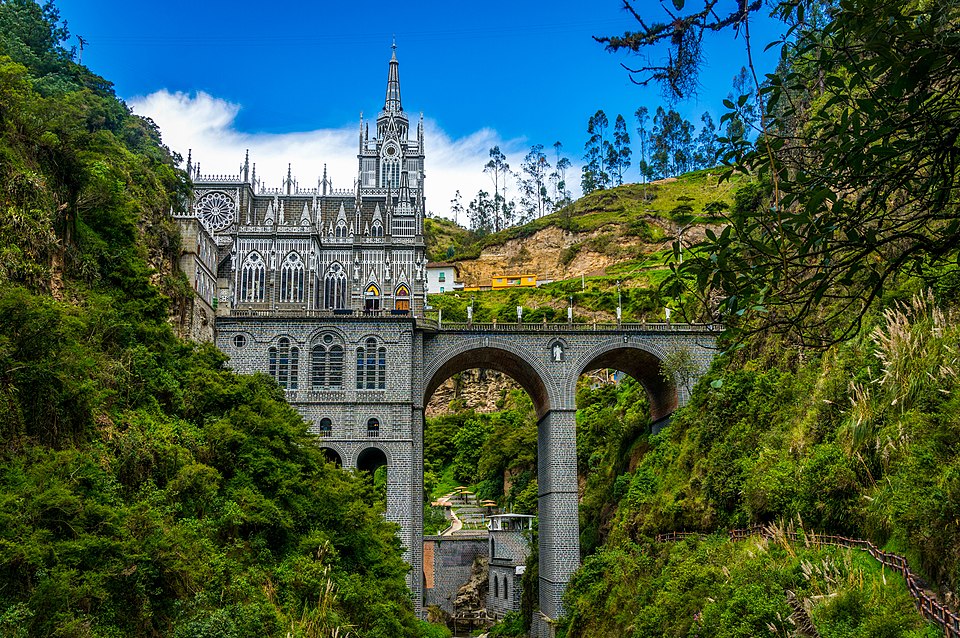
La Lajas Sanctuary is a Roman Catholic church in Ipiales, Colombia, built inside the Guáitara River canyon. According to local legends, in 1754, an indigenous woman named Maria Mueses de Quinones and her deaf-mute daughter Rosa sought refuge in a cave in the Guáitara River, and for the first time, Rosa spoke, describing a vision of the Virgin Mary on the canyon wall. The first version of the sanctuary was a simple shrine, which then, over the next two centuries, grew and expanded until the current version of the Las Lajas Cathedral was built between 1916 and 1949, designed and looked over by Lucindo Espinosa and Gualberto Pérez, an architect and an engineer.
This sanctuary provides students with a place that is full of faith, community, and architecture, offering a look at how humans use built spaces to express belief and shared identity across generations. Viewed from an architectural standpoint, the engineering challenge of constructing a Gothic Cathedral across a deep river gorge is fascinating and is a great topic of discussion with structural design and civil engineers. This site also serves to be a great place to dive deep into the cultural aspect, with how it is located at the intersection of indigenous Andean traditions and Spanish colonial Catholicism, making it a great starting point for discussions on cultural identities and colonialism in South America.
ACIS Trip Spotlight: Best of Colombia
The Underground Basilica of Porta Maggiore – Rome, Italy
Discovered in 1917, the Porta Maggiore Basilica is an underground basilica (a large public building) near Porta Maggiore in Rome that dates to the 1st century BC. As for who built the basilica and for what purpose, it still remains a mystery. Some scholars believe that it was a meeting hall of the neo-Pythagoreans and is suggested to be the only historical site that has been associated with the neo-Pythagorean movement.
The Basilica of Porta Maggiore is one of the best representations of history, showing how, despite how we live in a world where information is instant, and certainty is expected, in this vast unexplained space teaches that history is an interpretation of the past. This site, beyond just viewing the space and developing theories, also broadens students’ understanding of ancient Roman life beyond the empire’s grand monuments. In the ancient world, its safe to say that there were various types of philosophies held by the different locations, and visiting the hidden basilica makes this diversity real.
ACIS Trip Spotlight: Bell’Italia
Bonus Location!
The Hidden Rails – Moscow, Russia
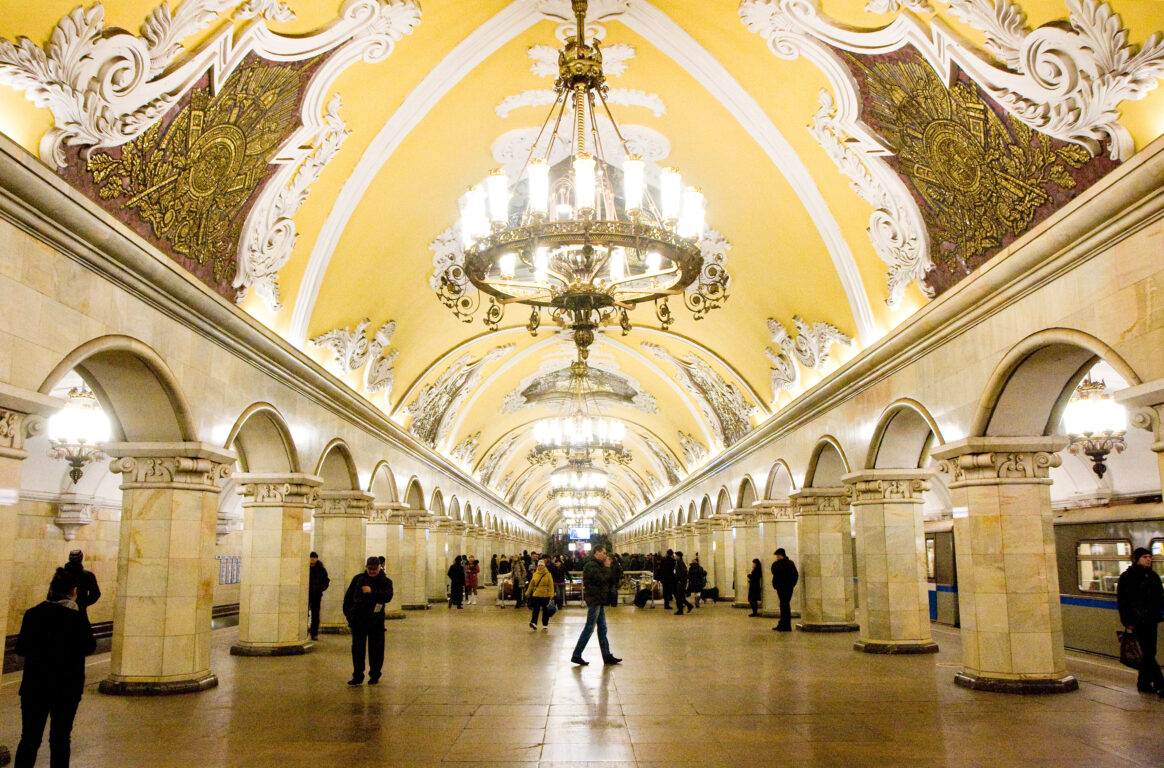
The Moscow Metro is an underground system, with some rumored parts known as Metro-2, and its construction was allegedly ordered by Stalin in the early 1930s as a direct expression of their ideologies and beliefs. The metro was opened as a Soviet project, with each of the stations designed to showcase Soviet history through elaborate marble columns, chandeliers, bronze sculptures, and more. During World War II, the stations served as bomb shelters, medical aid centers, and even as platforms for Stalin’s speeches delivered to the public from Mayakovskaya station. Today, this system spans over 210 stations, and many of the architectural designs of the halls remain almost unchanged from the 20th century.
Moscow’s metro system is one of the greatest hidden architectural experiences, especially for students, as they slow down and take in the designs, such as stations like Komsomolskaya with its Baroque ceilings and military mosaics. Each design detail in the architecture of this location represents a part of the past, and it provides an immersive look into the history. This location is great for students studying world history, politics, or more, and using what they learn in class, the learning have be expanded by experiencing first-hand what the 20th-century Moscow looked like and how its grown and shaped into the modern city it is now.
How can I find unique travel experiences?
ACIS educational travel programs takes a step beyond the norm to create amazing learning opportunities and lifelong memories. You’ll experience the bucket list attractions abroad but also unique travel experiences you can’t find anywhere else, from making fresh mozzarella in Sorrento to helping out at a beekeeping farm in Greece. With our trusted network of Tour Managers and overseas support, you can feel good going off-the-beaten-path and immersing yourself in the culture of destinations worldwide.


Isha Borole